Choosing the right cutting method can transform the quality, speed, and cost-efficiency of your project. While both laser cutting and waterjet cutting have become essential technologies across UK manufacturing, they perform differently, and both have their benefits.
This guide breaks down how each process behaves: from edge quality and tolerances to sustainability, material constraints, and project scale. To make it easier to decide which cutting method aligns with what you need.
Why Your Material Cutting Method Matters
Whether you’re producing a one-off prototype or fulfilling a production run, the cutting method influences:
- Dimensional accuracy
- Risk of distortion
- Project turnaround time
- Material suitability
- Overall cost
Laser cutting and waterjet cutting can often be used on similar jobs, but the results are not always the same. Understanding the differences helps avoid unexpected issues such as heat damage, taper, or the wrong finish for your application.

Laser Cutting: Precision and Speed for Detailed Components
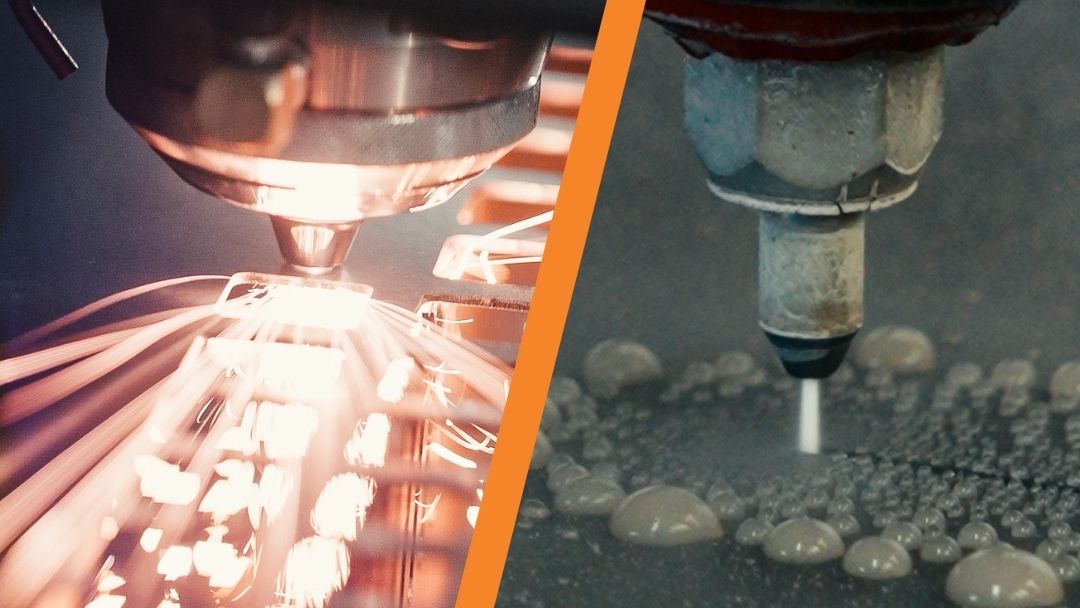
Laser cutting uses a highly focused beam to melt or burn material along a programmed path. This makes it popular for components that demand fine detail, consistent repeatability, and quick processing times.
Strengths of Laser Cutting
- Exceptionally fine detail: Ideal for small features and intricate internal cut-outs.
- Fast processing speed: Particularly effective for thin metals.
- Minimal kerf width: Allows for nesting parts closely, reducing waste.
- Clean, sharp edges: Reduced finishing on many metals.
Laser cutting excels when design complexity and repeat accuracy matter more than material thickness.
Waterjet Cutting: A Versatile Cold Cutting Method
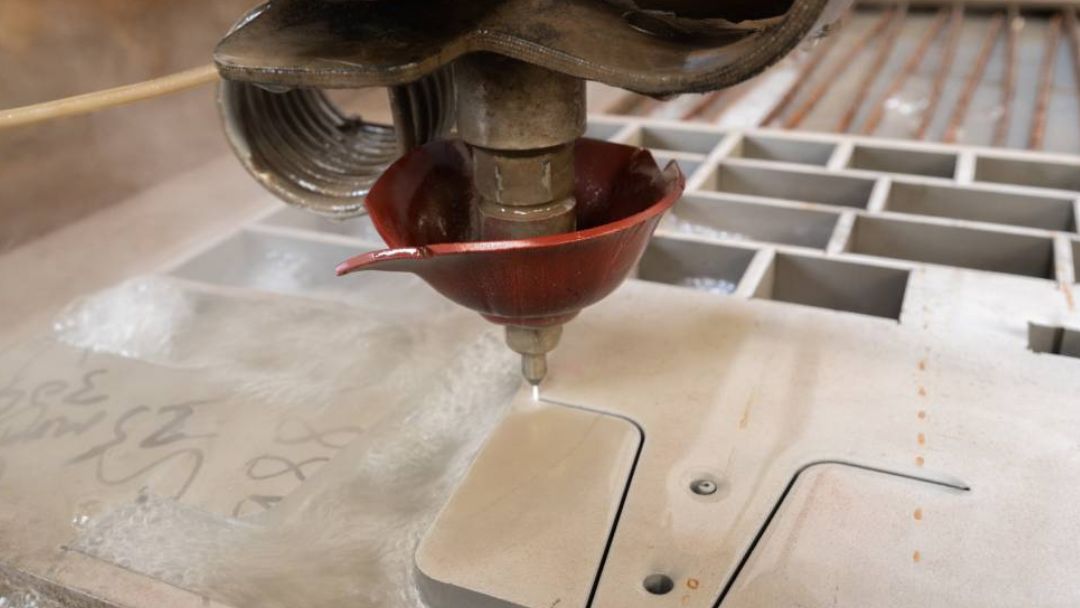
Waterjet cutting operates without heat, using a high-pressure water stream (with or without abrasive) to erode material. This method protects the material’s properties and works for a vast range of materials.
Strengths of Waterjet Cutting
- Zero heat-affected zone (HAZ): Essential for materials that warp, melt, or discolour under heat.
- Cuts almost anything: Metals, stone, plastics, wood, and more.
- Superior thickness capability: Handles substantial material sizes that lasers cannot cut cleanly.
- Smooth, high-quality edges: Often suitable without secondary finishing.
Waterjet is the go-to choice for both delicate materials and extremely tough ones.
Comparing the Two Methods
Instead of simply listing pros and cons, here’s how the two methods behave across the criteria that engineers and designers care most about:
1. Material Compatibility
Laser: Excellent for thinner metals but limited on reflective surfaces and non-metals. Click here for more information.
Waterjet: Can cut most things; it’s one of the most flexible cutting methods available. Click here for more information.
2. Tolerances and Accuracy
Laser: Superior for intricate detail and small features.
Waterjet: Very accurate, though kerf width is slightly larger.
3. Edge Condition
Laser: Sharp and precise, but may show slight heat marks on certain metals. Contact us for more information.
Waterjet: Clean, burr-free edges with no thermal effects.
4. Thickness Capability
Laser: Performs best with thin to mid-thickness materials.
Waterjet: Handles much greater thicknesses consistently.
5. Sustainability and Waste
Laser: Energy-efficient, but fumes need extracting. There is minimal waste due to the level of precision.
Waterjet: No fumes; water and abrasive can be recycled. Due to the level of accuracy and no risk of heat-affected zones (HAZ), there is limited waste.
How to Choose the Right Cutting Process for Your Next Project
Here’s a guide based on your priorities:
Choose Laser Cutting If You Need:
- Fine detail and tight tolerances
- Fast turnaround on sheet metal
- Repeatability for production runs
- Clean, crisp edges on metals
Choose Waterjet Cutting If You Need:
- To avoid any form of heat input
- Thick or specialist materials processed
- A finish suitable for functional or aesthetic parts
- Flexibility across different material types
What If You’re Still Unsure?
Many projects can be approached with either technology, but one will usually offer a clear advantage in quality or cost. We operate both laser cutting and waterjet cutting in-house, allowing us to recommend the best solution based on material and performance goals.
If your material cannot be laser cut or risks being compromised by heat, we can move your project seamlessly to waterjet cutting with no loss of accuracy or design intent. Contact us to speak with our experts.